Log in


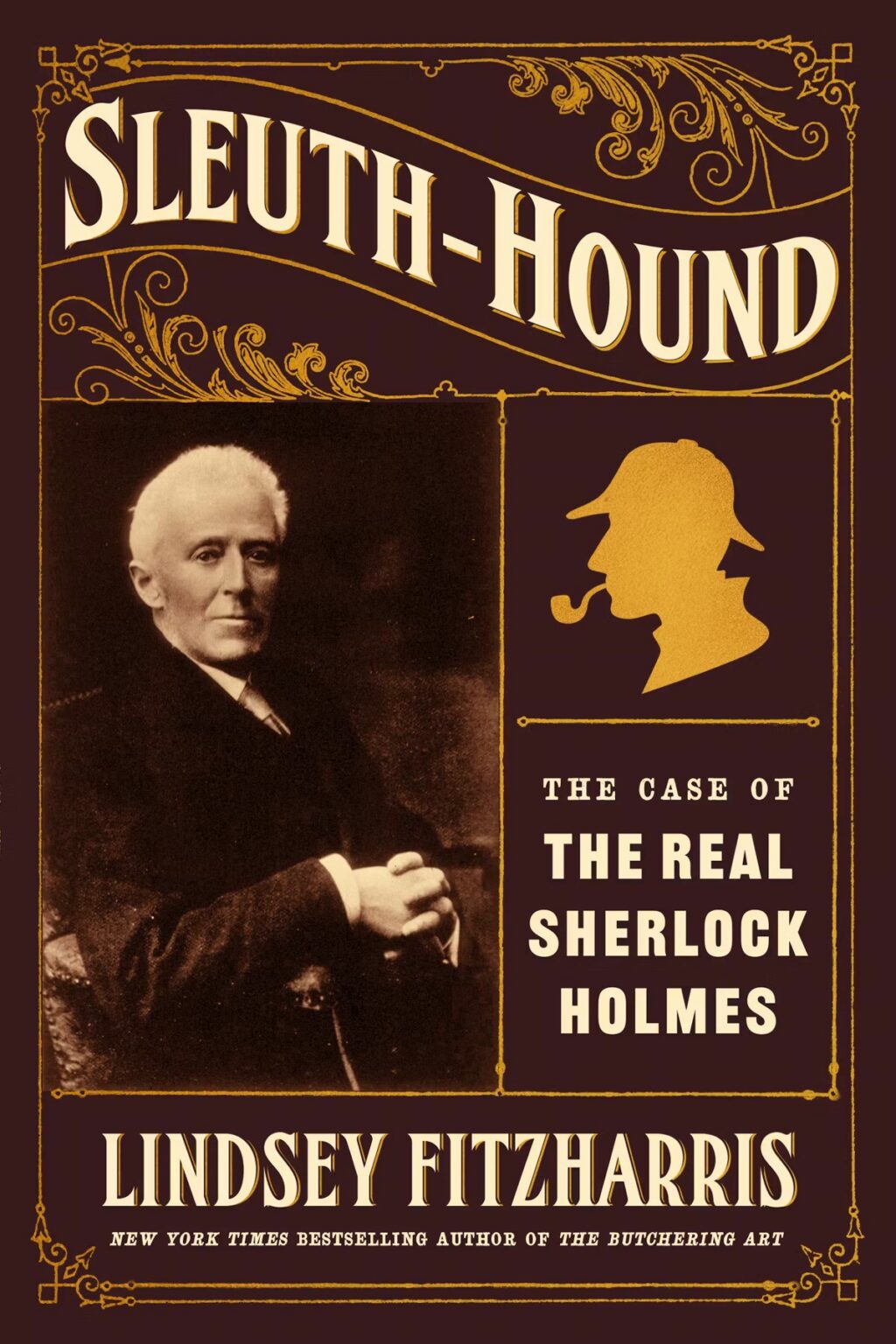
Sir Arthur Conan Doyle created one of the most beloved fictional detectives of all time in Sherlock Holmes, spawning countless novels, films, TV series, and so forth featuring the sleuth. Far fewer people know about the real-life inspiration for Holmes: a renowned surgeon at Scotland's University of Edinburgh named Joseph Bell, who taught Doyle when the author was still a young medical student. Bell is the subject of a new, eminently readable biography, Sleuth-Hound: The Case of the Real Sherlock Holmes, by medical historian Lindsey Fitzharris.
A noted science communicator with a fondness for the medically macabre, Fitzharris published a biography of Scottish surgical pioneer Joseph Lister, The Butchering Art, in 2017—a great, if occasionally grisly, read. She followed up with 2022’s The Facemaker: A Visionary Surgeon’s Battle to Mend the Disfigured Soldiers of World War I, about a WWI surgeon named Harold Gillies who rebuilt the faces of injured soldiers.
In 2020, Fitzharris hosted a documentary for the Smithsonian Channel, The Curious Life and Death Of…, exploring famous deaths, ranging from drug lord Pablo Escobar to magician Harry Houdini. Fitzharris performed virtual autopsies, experimented with blood samples, interviewed witnesses, and conducted real-time demonstrations in hopes of gleaning fresh insights. And last year she and her husband, caricaturist Adrian Teal, collaborated on an illustrated children's book, Dead Ends! Flukes, Flops, and Failures that Sparked Medical Marvels.
With Sleuth-Hound, Fitzharris returns to the Edinburgh of The Butchering Art, of body snatchers and surgeons' discovery of ether, which was also the Edinburgh of Arthur Conan Doyle and Joseph Bell. Bell was notorious for his peculiar method of diagnosis: he was able to infer a patient's occupation and personal habits, as well as any ailments, just by looking at them. For instance, Bell once figured out the route a patient had taken walking to the infirmary by identifying the type of clay on the patient's boots—an incident Doyle used in The Sign of the Four. Bell was also something of a medical detective, working with a local police surgeon on some of the most famous murder cases of his day.
Ars caught up with Fitzharris to learn more.
Ars Technica: What drew you to writing an entire book about Joseph Bell?
Lindsey Fitzharris: I've known about Bell because I'm a medical historian and I knew that he was an inspiration for this character, but nobody had written a big commercial book on him. There was a book in 1982 by a guy named Ely Liebow. So people in the Sherlockian world, they know a bit about Bell through him, but I really wanted to bring a medical history lens to it.
When I sold the Sleuth-Hound proposal, I had never read the original Sherlock Holmes tales. I decided to put off reading them initially because I knew enough about Bell to know that it became an irritating comparison; he found it rather reductive at the end of his life. I really wanted to bring the real man behind the myth to life in Sleuth-Hound, not just as the inspiration for Sherlock Holmes, not just as this parlor trick, but as this complex character. I've been talking to a lot of Sherlockians who have been really surprised at how much Bell is Sherlock, but also how much he isn't Sherlock. That's an interesting discussion as well: why Conan Doyle focused on this one aspect of him.
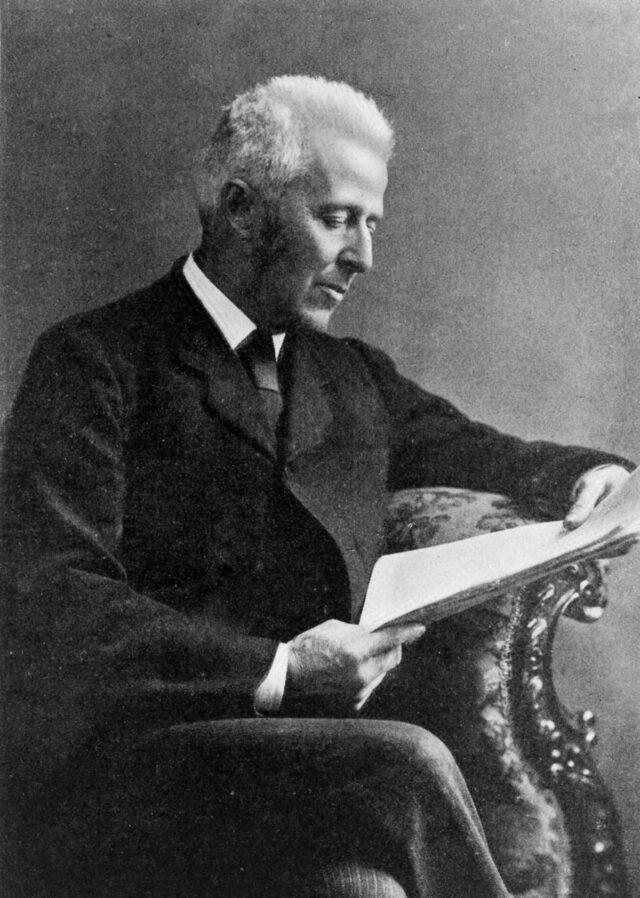 Dr. Joseph Bell
Credit:
Public domain
Ars Technica: What are some of the ways Bell is and isn't Sherlock?
Lindsey Fitzharris: He had this Sherlockian way about him where he could tell everything about a person before they ever spoke a word: a callous, a stain, a limp, all were clues to Bell if you only knew how to see it. But in a lot of ways he wasn't Holmes. For instance, he was a deeply empathetic character. He was very feeling for his patients. And he also was a family man. His wife dies when he's in his 30s, and he doesn't remarry his entire life. He holds the torch for her. She dies in childbirth, and he raises his three children alone.
My husband is a caricaturist, and we have this discussion about how he can only caricature people he doesn't know well. That's because caricature is about those first impressions. I think Conan Doyle knew Bell in his capacity as a student, but he didn't know Bell the man. So he took the most recognizable flashy trait of Bell and transposed that onto Sherlock Holmes. The question I pose at the end of the book is, would Holmes exist if Conan Doyle had known Bell better, or would he exist in the same format?
Ars Technica: Did Conan Doyle's contemporaries recognize the similarities?
Lindsey Fitzharris: Those who knew Bell recognized it immediately. Robert Louis Stevenson reads Sherlock Holmes. He writes to Conan Doyle and he says at the end of the letter, "One thing bothers me, could this be our old friend Joe Bell?"
But Bell was a lot more complex, and I really wanted to bring that medical history lens, because this isn't just a story about his relationship with Conan Doyle and the inspiration for Sherlock Holmes. It's about the development of forensic medicine. It's about the moment that medicine enters the courtroom for the first time. Bell wasn't just the inspiration for Holmes; he was actually doing what Holmes was doing in practice. He was working officially with a police surgeon named Henry Duncan Littlejohn, who was fascinating in and of himself. He was a pioneer of fingerprinting and courtroom photography. They end up partnering and working on some of the biggest high-profile cases in Scotland in the 19th century.
Ars Technica: I was frankly shocked about the baby farming case; I had no idea that was a common practice.
Lindsey Fitzharris: It's such a crazy story. The thing that I want people to contextualize here is that there was no birth control. So there were a lot of women having a lot of children, and they were deeply impoverished, and they didn't have enough money to feed these children. So they turned to the baby farmer. In theory, the baby farmer took the child and then took a fee from you, the mother, with the promise that they would farm out the child to somebody who could take care of the child. That was how it was supposed to work. There were no legal routes for adoption in the 19th century, so they turned to the baby farmer.
The case in Sleuth-Hound, the baby farmer, Jessie King, ends up taking the fee and then just killing the infants. This was a horrific case. The chapter opens with these boys finding this bundle of rags and using it as a football and kicking it around. And then they open it, and it's the decomposing remains of a child. Littlejohn and Bell work on the case. They perform the postmortems; they testify in the trial.
One of the dark themes of this book is that a lot of early forensics was built on the brutalized bodies of women in particular. Jessie King was killing infants, but this is a crime that is particular to women—women trying to get their children into families that could afford to feed them. A lot of the crimes are committed on women who never receive any justice, but the science outlives what their bodies taught these early forensic investigators like Bell and Littlejohn.
Ars Technica: Case in point: the infamous Chantrelle murder case and how it coincides with the rise of toxicology.
Lindsey Fitzharris: The Chantrelle case is so fascinating to me. Eugene Chantrelle was this respectable gentleman who lived in Edinburgh. He was a French tutor, and his wife Lizzie is seemingly poisoned by a gas leak, a broken pipe in the flat, and she's removed from the property and later dies. But it turns out that Chantrelle was abusing her the entire marriage.
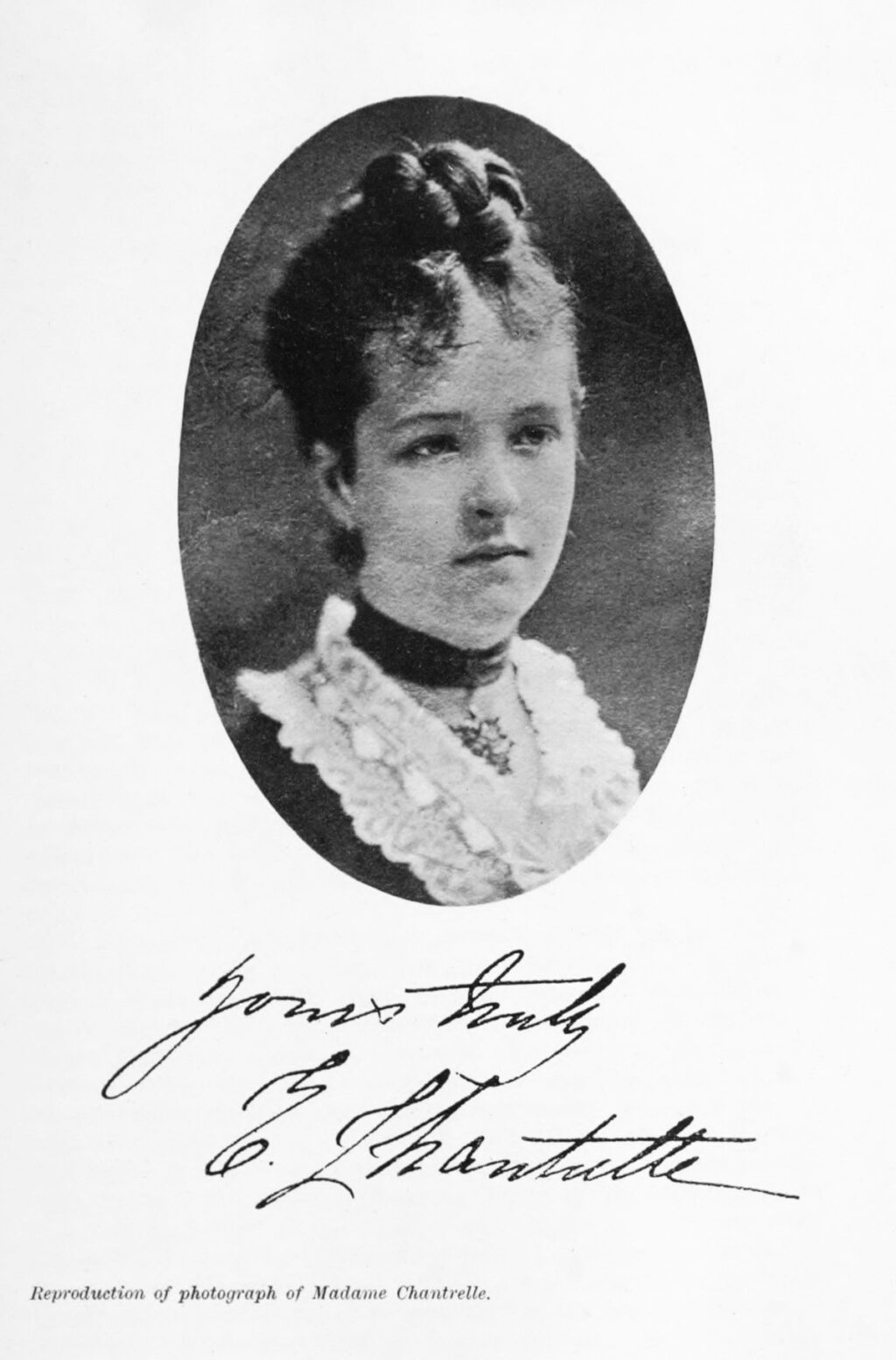
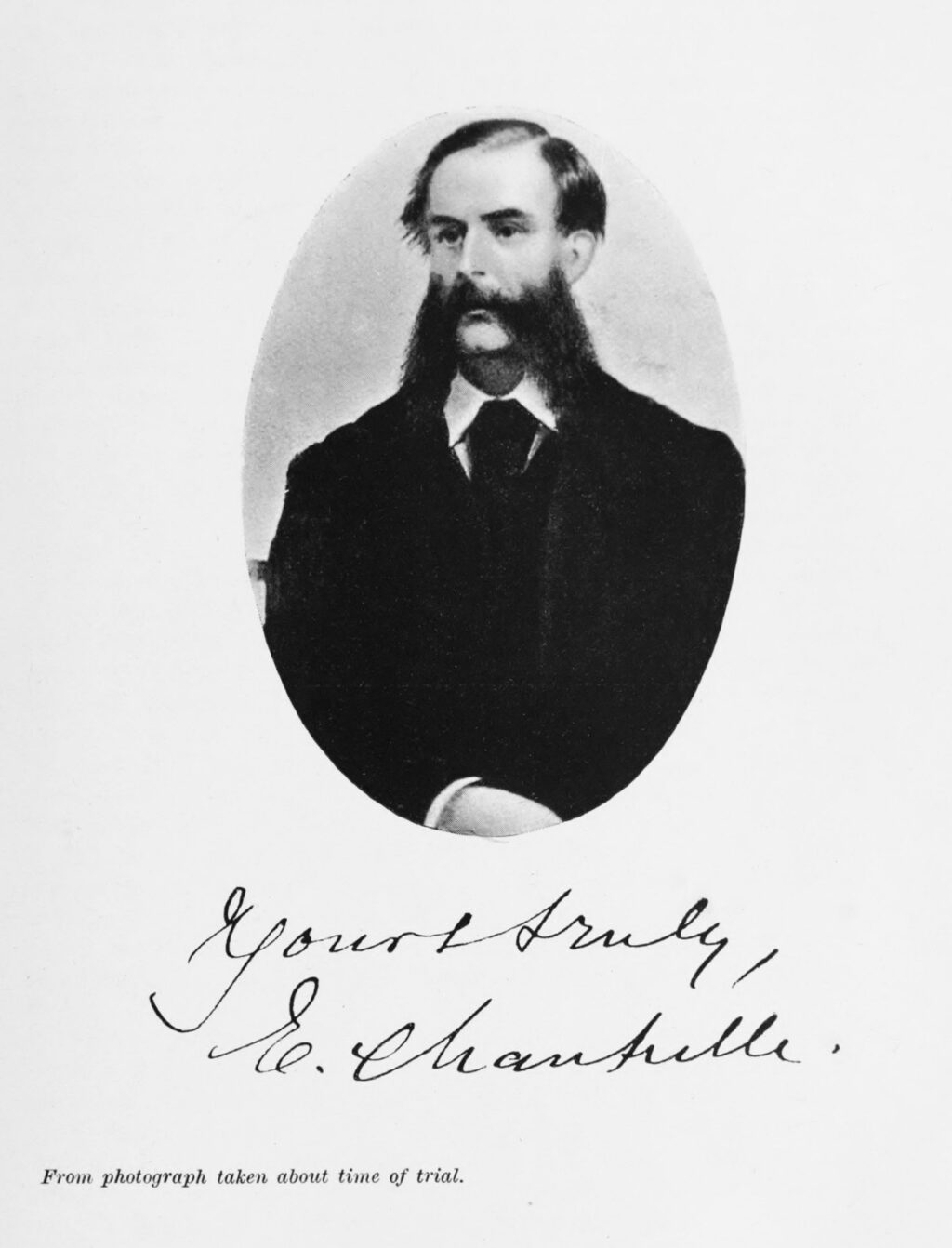
We think Littlejohn brought Bell onto the case. Bell and Littlejohn discover that it was opium poisoning, and they test the vomit on her nightgown, and they're able to tie him to this crime. Bear in mind, Bell worked like Sherlock Holmes. He worked in the shadows. So in these earlier cases, it was very difficult to know if Bell really did work on them.
But there's a really intriguing clue at the end of this story. Littlejohn investigates, [Eugene Chantrelle] is convicted, and he is hanged for this murder. On the scaffold, he allegedly looked around at the audience, locked eyes with Littlejohn, and shouted, "Give my regards to Joe Bell. He did a good job putting the noose around my neck." This was such a Sherlockian moment. How did Chantrelle know that Bell had worked on this case? We don't have any records that actually confirm this except that he allegedly said this on the scaffold.
The other extraordinary aspect of this story is that Chantrelle was drinking buddies with Robert Louis Stevenson, so he becomes one of the inspirations for Dr. Jekyll and Mr. Hyde: this respectable person on the outside and very sinister and evil on the inside. The prosecutor told Stevenson that this was not Chantrelle's first victim and that he had killed four or five other people with his opium and cheese parties.
Ars Technica: Your book launch should feature an opium and cheese party.
Lindsey Fitzharris: (laughs) And ether drinks. You're invited. The Victorian period was wild because there were a lot of poisons that you could just get over the counter from your pharmacist. Chantrelle had trained as a doctor at one point and had bought a huge amount of opium just before the murder. Even the chemist thought that this was strange, but he assumed that Chantrelle was a doctor. So poison was a big problem in the Victorian period. Some of it was legal, it was hard to detect. Forensic medicine was just developing. I call it the golden era of murdering because you probably had more of a chance in the 19th century of getting away with it.
Ars Technica: Sleuth-Hound is written in a deceptively novelistic style, but you've clearly done very extensive research on this. What sources did you find most helpful?
Lindsey Fitzharris: One of the things that happened was that Bell's diary became available, that had been locked away for over a century by the Bell family. Perhaps they were waiting for enough time to pass. I almost called the book Sleuth-Hounds because I do also think Littlejohn taught Conan Doyle as well. Bell gave Conan Doyle the method, and Littlejohn gave him the world of forensics. He was a professor of forensics in Edinburgh at the time. We can flesh out what Bell was doing because we know that they worked together often on these cases.
You do get dialogue through the murder trials, because there's so many documents and court records that go along with these trials. There are a lot of letters, diaries. Nothing's made up, but sometimes I had to take educated guesses. For instance, Conan Doyle is a terrible narrator of his own life. He constantly is contradicting himself, even in his own memoirs. It was difficult figuring out when he came into contact with Bell for the first time. I believe it's in the winter of 1878, and I provide a lot of context for that in the back notes of the book.
I'm a historian. It's got to be armed to the teeth with sources. But I want people to be able to pick up the book, not know anything about Sherlock Holmes, not know anything about medical history or forensics, and just be able to enjoy it. Medical history is the most universal way into the past. I make the past relatable. I tell you what that was like a hundred years ago.
My superpower in 2026 is that I'm one of the few people who can make you feel good about living today. Progress is not a straight line necessarily, but if you had that medical crisis a hundred years ago, it would've been a lot worse. I've been through cancer myself. Today is the best day to be alive and to get that diagnosis and tomorrow will be a little bit better, because I'm an optimist when it comes to medicine. I'm hoping that chemotherapy or radiation treatments will become obsolete. They're brutal. And there's a cancer vaccine on the horizon.
Ars Technica: In the US, sadly, we're going backwards on vaccines for preventable diseases like measles.
Lindsey Fitzharris: I know. We have short memories. We don't remember. It's weird to me as a medical historian because I remember it all. I remember the times when parents lost their children to preventable diseases. It's coming back, and it's sad to see that repeat. If I could just show people the diaries and the letters of brokenhearted parents who lost child after child to measles or polio and all of these diseases we can now treat and prevent. I put up pictures of smallpox on social media, and people think it's AI. They can't believe that something like that existed. It's the only human virus we've ever eradicated. It should be celebrated. So I'm always out there banging the drum. I hope that we steady the ship a bit and people learn from the past again.